

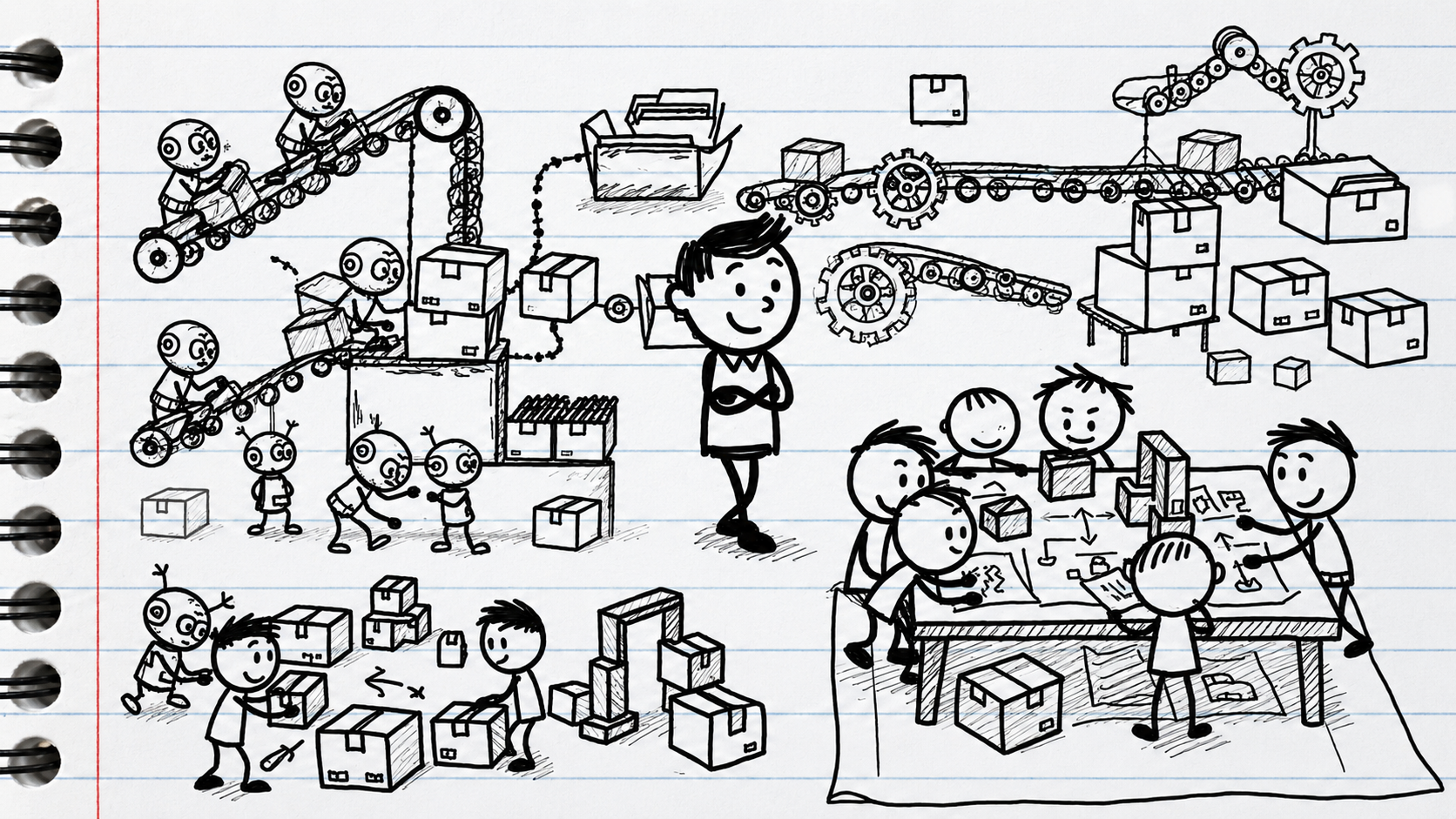
The New Architects of Work: How Agentic AI Is Creating the Next Generation of Enterprise Roles
Artificial intelligence is moving beyond chatbots, copilots, and isolated automation. The next wave is agentic AI: systems that can reason, take action, coordinate with other agents, and help execute business processes across the enterprise.
As this shift accelerates, a new class of technology and business roles is emerging. Two of the most important are the Agentic AI Business Solutions Architect and the AI Workforce Architect.
These roles reflect a major change in how organizations think about AI. The question is no longer only, “How do we add AI to existing workflows?” The bigger question is, “How do we redesign the business around intelligent agents, human expertise, automation, governance, and measurable outcomes?”
From AI Features to AI-First Business Architecture
For years, organizations approached AI as a feature: a recommendation engine, a chatbot, a document summarizer, or an automation layer. That model is changing.
Agentic AI introduces a different challenge. Instead of designing one AI feature inside one application, companies now need to design intelligent systems that can operate across departments, applications, data sources, and workflows.
That is where the Agentic AI Business Solutions Architect comes in.
This role focuses on designing AI-powered business solutions that are scalable, secure, governed, and aligned to measurable outcomes. It combines enterprise architecture, business process design, AI orchestration, platform knowledge, and responsible AI practices.
A traditional solution architect may design applications, integrations, data flows, and cloud environments. An agentic AI architect must also design how autonomous or semi-autonomous agents participate in business processes.
That means thinking about:
- Which business processes should be agent-enabled
- How multiple AI agents should coordinate
- Where humans remain in the loop
- How agents access data and systems securely
- How to measure business value and return on investment
- How to govern AI behavior, risk, auditability, and compliance
This role is not just about deploying AI. It is about architecting a new operating model for the enterprise.
What Does an Agentic AI Business Solutions Architect Do?
The Agentic AI Business Solutions Architect sits at the intersection of business strategy, enterprise architecture, AI design, governance, and implementation.
The role typically includes defining AI architecture strategies, creating roadmaps for agentic business processes, analyzing business and technical requirements, prototyping AI components, guiding implementation, and creating lifecycle management strategies for AI-powered solutions.
A practical version of the role might look like this:
An insurance company wants to modernize claims processing. Instead of simply adding a chatbot to answer customer questions, the Agentic AI Business Solutions Architect designs a network of agents. One agent gathers customer information, another validates policy coverage, another summarizes evidence, another escalates exceptions to a human adjuster, and another updates the system of record.
The architect must ensure that every part of this process is secure, compliant, observable, and measurable. The goal is not automation for automation’s sake. The goal is a better business outcome: faster claims, fewer errors, improved customer experience, and reduced operational cost.
The AI Workforce Architect: Designing the Human-Agent Organization
Alongside the Agentic AI Business Solutions Architect, another role is emerging: the AI Workforce Architect.
While the Agentic AI Business Solutions Architect focuses on the architecture of AI-powered business systems, the AI Workforce Architect focuses on how AI changes the structure of work itself.
This role asks questions such as:
- Which tasks should be handled by humans, AI agents, or both?
- How should job roles change when employees have copilots and agents?
- What new skills do teams need?
- How should organizations govern AI-assisted work?
- How should productivity, quality, and employee experience be measured?
- How do companies avoid simply automating old inefficiencies?
The AI Workforce Architect is part strategist, part change leader, part technologist, and part organizational designer.
This role becomes especially important as organizations move from individual productivity tools to enterprise-wide AI adoption. Giving employees access to AI is only the first step. The bigger challenge is redesigning work so that people and agents collaborate effectively.
The Difference Between the Two Roles
These two roles are closely related, but they are not the same.
The Agentic AI Business Solutions Architect designs the systems, platforms, integrations, agent patterns, security model, and lifecycle approach for AI-powered business solutions.
The AI Workforce Architect designs how people, teams, roles, processes, and AI agents come together to create a new model of work.
One is more solution-architecture centered. The other is more workforce-transformation centered. But in practice, they will often collaborate.
For example, when a company deploys copilots, custom agents, low-code automations, and AI-powered workflows, the Agentic AI Business Solutions Architect may define the technical and process architecture. The AI Workforce Architect may define how departments adopt the solution, how roles change, what training is required, and how success is measured.
Together, they help organizations move from AI experimentation to AI operating models.
Why These Roles Matter Now
Many organizations are still treating AI as a productivity add-on. They give employees access to copilots, run a few pilots, and hope value appears. But agentic AI requires more intentional design.
Without architecture, AI initiatives can become fragmented. Different departments build disconnected agents. Data access becomes risky. Governance becomes inconsistent. Business value is difficult to prove. Employees may resist adoption because the new tools do not clearly fit into their work.
These new roles exist because enterprises need people who can connect the dots between technology, process, governance, workforce design, and business outcomes.
The Agentic AI Business Solutions Architect ensures that AI solutions are designed well.
The AI Workforce Architect ensures that the organization is ready to work differently.
The Skills That Will Define the Next Generation of AI Leaders
Professionals who want to move into these roles will need a hybrid skill set.
They will need technical fluency in AI platforms, copilots, agents, low-code tools, enterprise applications, data integration, security, and orchestration. They will also need business architecture skills: process design, requirements analysis, ROI modeling, stakeholder alignment, and change management.
Just as importantly, they will need judgment.
Agentic AI introduces questions about autonomy, trust, accountability, and responsible use. Architects in this space must know when to automate, when to augment, when to escalate, and when to keep humans firmly in control.
Key capabilities will include:
- Designing AI-first business processes
- Orchestrating multiple agents
- Securing AI models, data flows, and system access
- Applying responsible AI principles
- Monitoring agent performance and reliability
- Measuring business outcomes
- Managing change across teams and departments
- Translating business goals into AI-powered operating models
These are not narrow technical skills. They are enterprise transformation skills.
A New Career Path Is Taking Shape
The emergence of these roles signals a broader shift in the technology labor market.
In the cloud era, organizations needed cloud architects. In the data era, they needed data architects and analytics leaders. In the AI era, they will need professionals who can architect intelligent systems and redesign work around them.
The Agentic AI Business Solutions Architect and AI Workforce Architect are early examples of this shift.
They are not simply “AI jobs.” They are business transformation roles.
They require people who understand that the value of AI does not come from the model alone. It comes from how the model is embedded into workflows, systems, teams, decisions, and outcomes.
Conclusion
Agentic AI will change more than software. It will change how organizations operate.
The companies that succeed will not be the ones that deploy the most AI tools. They will be the ones that design the best human-agent systems, govern them responsibly, and align them to measurable business value.
That is why roles like Agentic AI Business Solutions Architect and AI Workforce Architect matter.
They represent the next stage of enterprise AI maturity: moving from experimentation to architecture, from automation to orchestration, and from digital transformation to AI-first operating models.
👉 Ready to move from AI experimentation to AI-powered business transformation?
At Pevaar, we help organizations design, orchestrate, and scale intelligent agent ecosystems that drive measurable business outcomes, operational efficiency, and sustainable growth.

Leave a Reply