

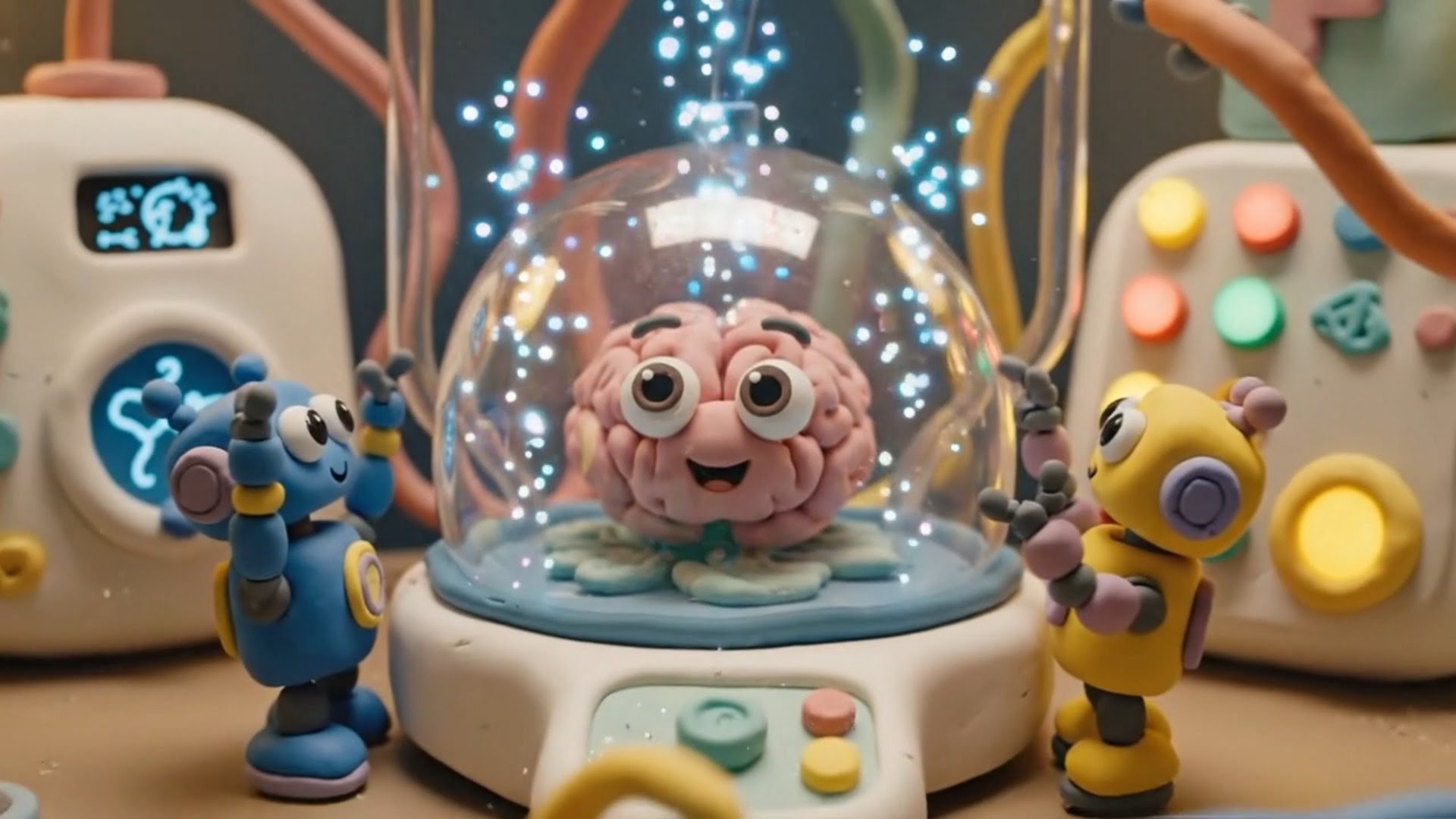
Pevaar Builds Agentic AI: The New Generation of Intelligent Agents
Can you imagine having a digital assistant that doesn’t just answer questions, but actually thinks, remembers, learns, and takes action on your behalf? That’s exactly what Pevaar is building with its Agentic AI approach.
We’re not talking about simple chatbots. We’re talking about intelligent agents with real autonomy—capable of reasoning, executing actions, and improving over time. Let’s break down how this groundbreaking architecture works.
What Is Agentic AI?
Agentic AI is an evolution of traditional artificial intelligence. While classic models simply respond to instructions, agentic systems make decisions, plan actions, and carry out tasks.
Think of it as the difference between a book and a strategic advisor. A book gives you information. An advisor works alongside you and takes action.
Why Is Pevaar Investing in Agentic AI?
Because the future isn’t about asking questions and getting answers—it’s about delegating entire tasks.
Businesses need intelligent automation. They need systems that understand context, integrate data, and execute processes. Pevaar recognized that the right combination of six technological pillars could make this possible.
The 6 Key Components of Pevaar’s AI Agents
1. LLM (The Brain)
The LLM is the agent’s cognitive core. It’s responsible for reasoning, analysis, and generating responses.
Reasoning and Cognition
This is where the magic happens. The LLM interprets information, identifies patterns, and builds solutions. It’s not just predictive text—it’s applied logic.
Intelligent Decision-Making
It can evaluate options, prioritize tasks, and choose the best course of action. Think of it as having a digital strategist available 24/7.
2. Memory
An agent without memory would be like someone with constant amnesia. Pevaar integrates both persistent and contextual memory.
Persistent Storage
It retains relevant data—customer history, preferences, past outcomes.
Conversational Context
It remembers what was discussed five minutes ago or even last week, enabling coherent and personalized interactions.
3. RAG (Knowledge)
RAG stands for Retrieval-Augmented Generation. In simple terms: intelligent access to external knowledge.
External Knowledge Retrieval
The agent doesn’t rely solely on its training. It can query databases, documents, and enterprise systems.
Real-Time Business Data
Imagine asking, “How many sales did we make today?”—and the agent directly queries your ERP and returns up-to-date figures.
That’s real power.
4. Tools
Thinking matters. But taking action matters more.
Action Capability
Agents can send emails, create records, generate reports, and update databases.
Operational Automation
They don’t just recommend—they execute. They close entire workflows from start to finish.
5. Prompt (Instructions)
The prompt defines intent and behavior.
Control and Intent
It establishes the agent’s rules, objectives, and boundaries.
Agent Governance
It ensures the system operates within the ethical and strategic standards defined by the company.
6. Machine Learning
This is where continuous evolution comes in.
Ongoing Adaptation
The agent learns from every interaction.
Data-Driven Improvement
It refines responses, detects patterns, and increases efficiency over time.
It’s like training an employee who never forgets what they’ve learned.
How These Components Work Together
These aren’t isolated pieces—they operate as an ecosystem.
The LLM reasons.
Memory provides context.
RAG brings in external knowledge.
Tools execute actions.
The prompt guides intent.
Machine Learning optimizes the entire process.
It’s a perfectly synchronized digital orchestra.
Business Use Cases
Automated Customer Support
Handles inquiries, accesses internal systems, and resolves cases without human intervention.
Internal Process Automation
From expense approvals to financial report generation.
Business Intelligence and Predictive Analytics
Identifies trends, analyzes data, and recommends strategic decisions.
Competitive Advantages of Pevaar’s Agentic AI
Scalability
It can handle thousands of requests simultaneously.
Advanced Personalization
Each customer receives responses tailored to their history and behavior.
Reduced Operational Costs
Fewer manual tasks, greater efficiency.
The Future of Autonomous AI
We’re entering an era where AI doesn’t just respond—it acts.
Agentic AI is redefining productivity. It frees up human time for strategic work, reduces errors, and increases speed.
And best of all—it gets better over time.
Conclusion
Pevaar isn’t building simple AI tools. It’s creating fully realized intelligent agents—with a brain, memory, knowledge, action capabilities, direction, and the ability to learn.
Agentic AI represents the next step in enterprise digital evolution.
And the question is no longer whether your company needs it.
The real question is: when will you get started?
FAQs
1. What makes Agentic AI different from a traditional chatbot?
A chatbot answers questions. An agentic system reasons, queries systems, executes actions, and learns.
2. Is this technology safe for businesses?
Yes. It includes governance, prompt-based controls, and a secure architecture.
3. Can it integrate with existing systems?
Absolutely. It’s designed to connect with ERPs, CRMs, and enterprise databases.
4. Does it require a lot of maintenance?
No. Thanks to Machine Learning, it continuously improves with minimal intervention.
5. Is it scalable for large enterprises?
Yes. The architecture is built to operate at scale without compromising performance.
Companies that delegate to intelligent AI don’t just move forward—they get ahead.
👉 Ready to give your business a real competitive edge with Agentic AI?
At Pevaar, we help you build agents that think, act, and evolve with you.











Leave a Reply