

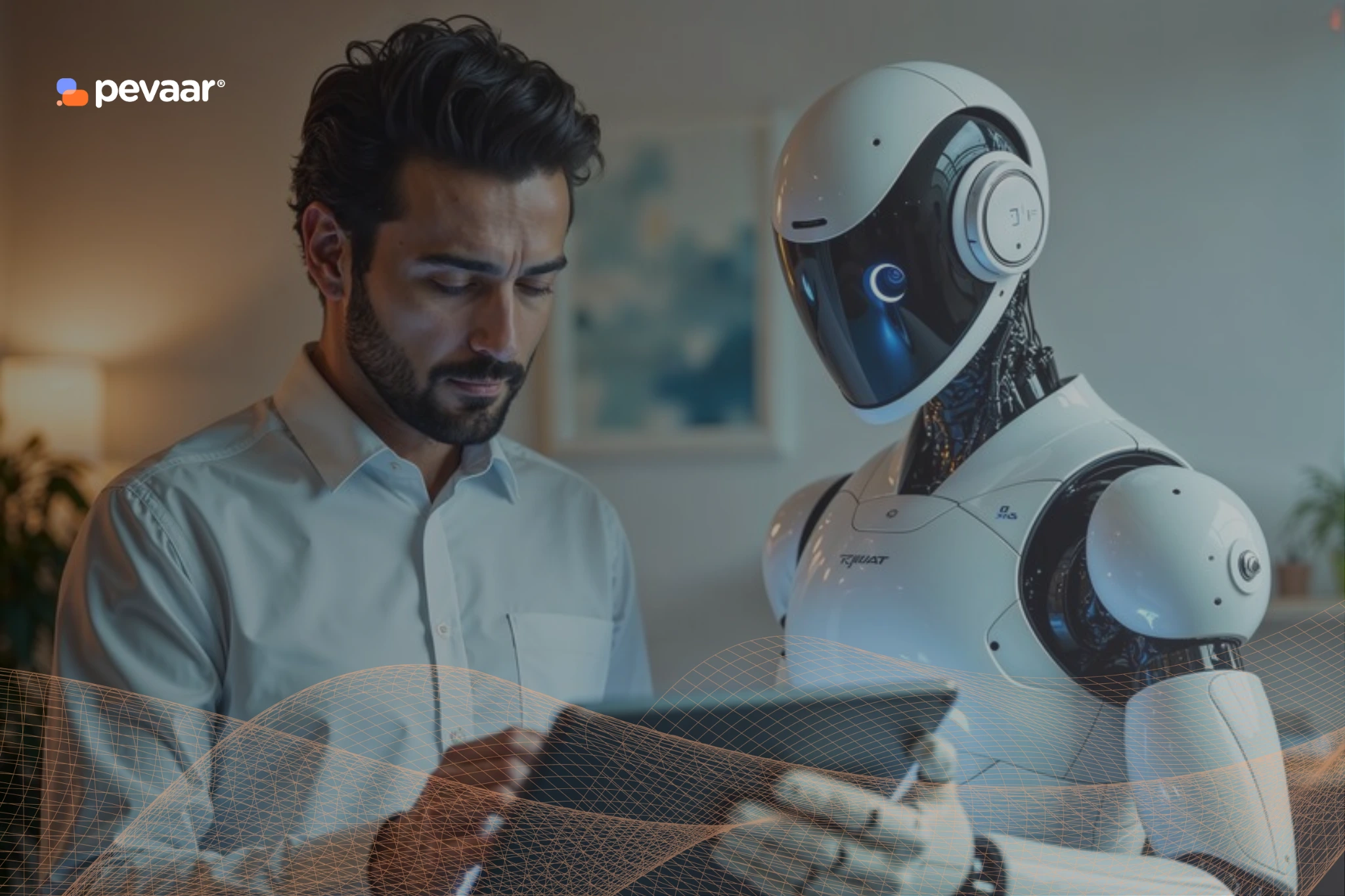
The Essential Guide to AI Trainers: Who They Are and What They Do
Artificial intelligence is only as good as the people who train it. That’s where AI trainers come in — the human experts responsible for shaping how models learn, respond, and improve. As businesses increasingly rely on AI to streamline operations, the role of AI trainers is becoming essential to ensuring reliable, accurate, and ethical systems.
For tech leaders, integrating AI trainers into the workflow isn’t just a smart move — it’s a strategic advantage. From improving data quality to reducing bias, AI trainers help close the gap between human goals and machine learning outcomes.
In this blog, we’ll walk through a practical approach to bringing AI trainers into your team, outlining the steps, tools, and considerations you need to do it right.
 AI trainers are the human backbone behind intelligent systems. Their job is to teach AI models how to understand, interpret, and respond accurately to data.
This often means feeding the model with curated examples, correcting its mistakes, and refining its outputs over time. It’s a continuous learning process — and humans play a key role in guiding it.
In real-world scenarios, AI trainers label data for supervised learning, review model responses, or rank multiple AI-generated outputs based on relevance and quality.
They also give feedback on tone, clarity, and ethical alignment, especially in large language models or conversational AI.
While AI can process data at scale, it lacks the nuance, empathy, and judgment that only humans can offer. That’s why trainers are essential — they bring context, culture, and common sense into the loop. Think of them as digital coaches. They make sure AI doesn’t just work — it delivers consistent, human-aligned results.
AI is powerful — but only when it’s trained well. Without human input, even the most advanced models can deliver irrelevant, biased, or inaccurate results.
Many companies invest in AI but overlook the human guidance it needs to succeed. This is where AI trainers make the difference.
They help align the model’s behavior with your business goals. That means fewer mistakes, better customer experiences, and more reliable outcomes.
AI trainers also help reduce bias. By spotting issues early, they prevent harmful patterns from becoming part of the system.
Another major benefit? Flexibility. As your company evolves, AI trainers help your models adapt to new products, regions, or audiences.
In short, they turn AI from a generic tool into a custom-fit solution for your organization.
As AI models grow more advanced, the role of AI trainers is evolving — not disappearing.
What began as basic data labeling has become something much more strategic. Today’s AI trainers help shape the tone, behavior, and ethical alignment of intelligent systems. They’re not just supporting AI development — they’re influencing how it thinks and interacts.
This shift is bringing new roles and skills into the spotlight. We’re seeing the rise of positions like prompt engineers and AI alignment testers, where a strong understanding of both technology and human behavior is essential.
Empathy, cultural sensitivity, and critical thinking are becoming just as valuable as technical skills. AI trainers who can blend both are in high demand.
Even as AI systems become more autonomous, human oversight will remain critical — especially in areas like healthcare, law, and finance, where the cost of error is high.
The future of AI will be driven by collaboration between machines and people. And AI trainers will continue to be at the heart of that connection.
AI trainers are the human backbone behind intelligent systems. Their job is to teach AI models how to understand, interpret, and respond accurately to data.
This often means feeding the model with curated examples, correcting its mistakes, and refining its outputs over time. It’s a continuous learning process — and humans play a key role in guiding it.
In real-world scenarios, AI trainers label data for supervised learning, review model responses, or rank multiple AI-generated outputs based on relevance and quality.
They also give feedback on tone, clarity, and ethical alignment, especially in large language models or conversational AI.
While AI can process data at scale, it lacks the nuance, empathy, and judgment that only humans can offer. That’s why trainers are essential — they bring context, culture, and common sense into the loop. Think of them as digital coaches. They make sure AI doesn’t just work — it delivers consistent, human-aligned results.
AI is powerful — but only when it’s trained well. Without human input, even the most advanced models can deliver irrelevant, biased, or inaccurate results.
Many companies invest in AI but overlook the human guidance it needs to succeed. This is where AI trainers make the difference.
They help align the model’s behavior with your business goals. That means fewer mistakes, better customer experiences, and more reliable outcomes.
AI trainers also help reduce bias. By spotting issues early, they prevent harmful patterns from becoming part of the system.
Another major benefit? Flexibility. As your company evolves, AI trainers help your models adapt to new products, regions, or audiences.
In short, they turn AI from a generic tool into a custom-fit solution for your organization.
As AI models grow more advanced, the role of AI trainers is evolving — not disappearing.
What began as basic data labeling has become something much more strategic. Today’s AI trainers help shape the tone, behavior, and ethical alignment of intelligent systems. They’re not just supporting AI development — they’re influencing how it thinks and interacts.
This shift is bringing new roles and skills into the spotlight. We’re seeing the rise of positions like prompt engineers and AI alignment testers, where a strong understanding of both technology and human behavior is essential.
Empathy, cultural sensitivity, and critical thinking are becoming just as valuable as technical skills. AI trainers who can blend both are in high demand.
Even as AI systems become more autonomous, human oversight will remain critical — especially in areas like healthcare, law, and finance, where the cost of error is high.
The future of AI will be driven by collaboration between machines and people. And AI trainers will continue to be at the heart of that connection.
What Do AI Trainers Actually Do?
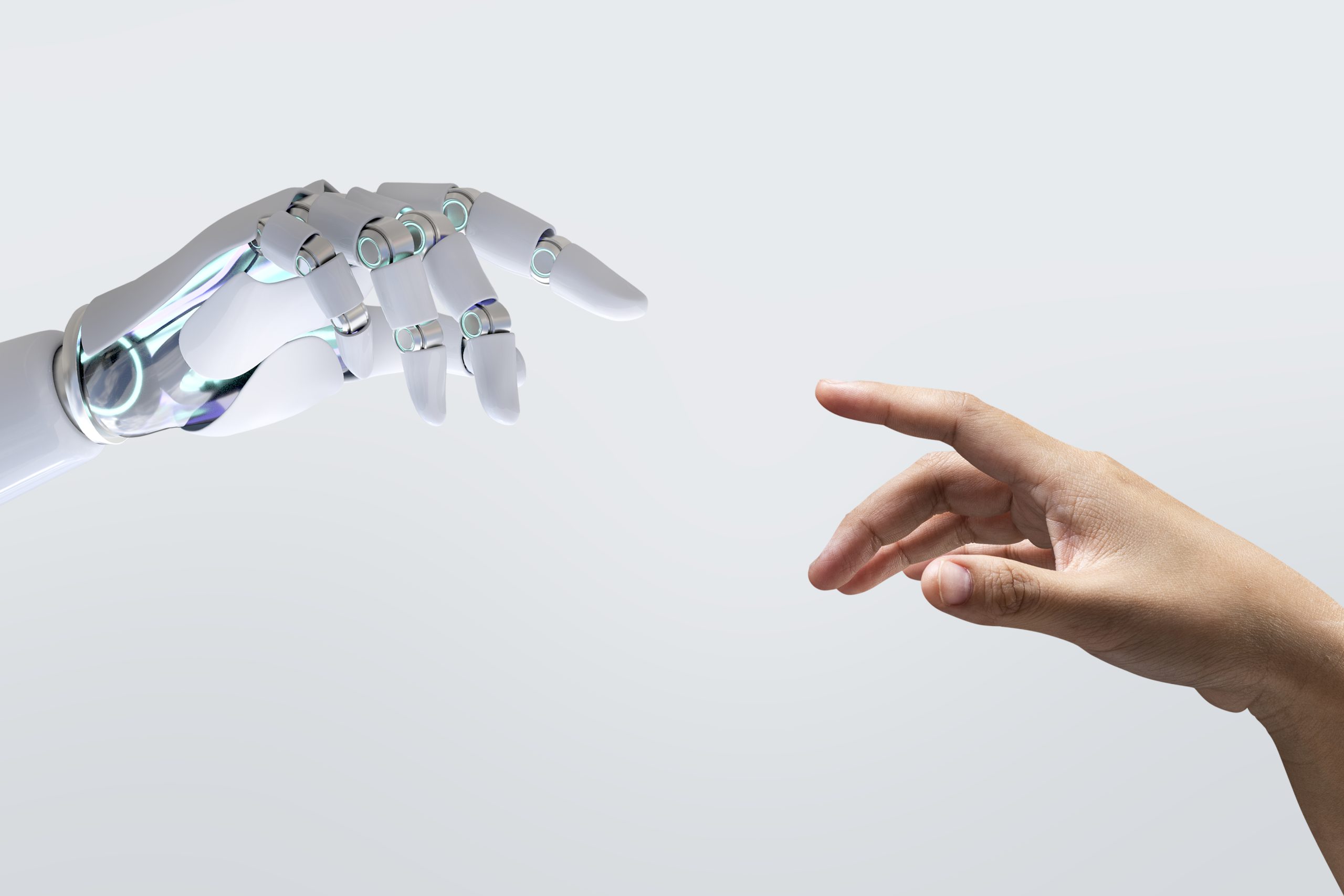 AI trainers are the human backbone behind intelligent systems. Their job is to teach AI models how to understand, interpret, and respond accurately to data.
This often means feeding the model with curated examples, correcting its mistakes, and refining its outputs over time. It’s a continuous learning process — and humans play a key role in guiding it.
In real-world scenarios, AI trainers label data for supervised learning, review model responses, or rank multiple AI-generated outputs based on relevance and quality.
They also give feedback on tone, clarity, and ethical alignment, especially in large language models or conversational AI.
While AI can process data at scale, it lacks the nuance, empathy, and judgment that only humans can offer. That’s why trainers are essential — they bring context, culture, and common sense into the loop. Think of them as digital coaches. They make sure AI doesn’t just work — it delivers consistent, human-aligned results.
AI trainers are the human backbone behind intelligent systems. Their job is to teach AI models how to understand, interpret, and respond accurately to data.
This often means feeding the model with curated examples, correcting its mistakes, and refining its outputs over time. It’s a continuous learning process — and humans play a key role in guiding it.
In real-world scenarios, AI trainers label data for supervised learning, review model responses, or rank multiple AI-generated outputs based on relevance and quality.
They also give feedback on tone, clarity, and ethical alignment, especially in large language models or conversational AI.
While AI can process data at scale, it lacks the nuance, empathy, and judgment that only humans can offer. That’s why trainers are essential — they bring context, culture, and common sense into the loop. Think of them as digital coaches. They make sure AI doesn’t just work — it delivers consistent, human-aligned results.
Why Your Company Needs AI Trainers
 AI is powerful — but only when it’s trained well. Without human input, even the most advanced models can deliver irrelevant, biased, or inaccurate results.
Many companies invest in AI but overlook the human guidance it needs to succeed. This is where AI trainers make the difference.
They help align the model’s behavior with your business goals. That means fewer mistakes, better customer experiences, and more reliable outcomes.
AI trainers also help reduce bias. By spotting issues early, they prevent harmful patterns from becoming part of the system.
Another major benefit? Flexibility. As your company evolves, AI trainers help your models adapt to new products, regions, or audiences.
In short, they turn AI from a generic tool into a custom-fit solution for your organization.
AI is powerful — but only when it’s trained well. Without human input, even the most advanced models can deliver irrelevant, biased, or inaccurate results.
Many companies invest in AI but overlook the human guidance it needs to succeed. This is where AI trainers make the difference.
They help align the model’s behavior with your business goals. That means fewer mistakes, better customer experiences, and more reliable outcomes.
AI trainers also help reduce bias. By spotting issues early, they prevent harmful patterns from becoming part of the system.
Another major benefit? Flexibility. As your company evolves, AI trainers help your models adapt to new products, regions, or audiences.
In short, they turn AI from a generic tool into a custom-fit solution for your organization.
When Is the Right Time to Integrate AI Trainers?
The right time is usually sooner than you think. If your team is already using AI — for customer service, content generation, analytics, or automation — you likely need AI trainers now. One clear sign is when your AI produces inconsistent or low-quality results. Another is when users start losing trust in the system. AI trainers are especially useful during early development. They help shape the model before bad habits form. But they’re also key after launch. As your product grows, AI trainers help the system learn from real-world interactions and feedback. If your workflows serve different markets or languages, AI trainers can adjust the model to stay accurate and culturally relevant. In short, if you want reliable, scalable, and human-aligned AI — the time to bring in trainers is now.Step-by-Step: How to Integrate AI Trainers into Your Workflow
Bringing AI trainers into your team doesn’t have to be complex. Here’s a simple, strategic process to get started:Step 1: Define Clear AI Objectives
Start with the why. What should your AI system achieve? Whether it’s faster customer support, smarter recommendations, or better data insights — clarity here sets the foundation for training.Step 2: Identify Where Human Input Is Needed
Not every process needs human guidance. Focus on areas where context, tone, or judgment matter most. These are often the parts where AI still struggles — and where trainers bring the most value.Step 3: Hire or Upskill AI Trainers
You can hire specialized AI trainers or train internal staff with domain knowledge. Look for people who are detail-oriented, tech-savvy, and understand your business goals. Soft skills like critical thinking and ethical awareness also matter.Step 4: Create Feedback Loops
Integrate AI trainers into regular workflows. Let them review outputs, flag issues, and provide corrections. Use tools that support human-in-the-loop systems, so their feedback improves the model over time.Step 5: Monitor and Iterate
Track performance. Are responses improving? Are users more satisfied? Use these insights to refine your process — and give AI trainers space to adapt as the model evolves.Key Considerations for Tech Leaders
Integrating AI trainers isn’t just about improving model accuracy — it’s about doing it responsibly.- Bias and Ethics: AI systems often reflect the data they’re trained on. If that data includes bias, the results will too. AI trainers help identify and correct these issues early. They act as a filter, applying human judgment to ensure fairness and ethical alignment.
- Data Privacy and Security: AI trainers work closely with sensitive data. It’s crucial to set clear boundaries and protocols to protect privacy. Make sure your team follows data compliance standards like GDPR or HIPAA, depending on your industry.
- Scalability and Maintenance: As your system grows, so does the complexity of keeping it aligned. Plan for ongoing training cycles. AI is never “done” — and AI trainers are key to continuous learning.
- Measuring Success: Define KPIs for your AI trainers’ impact. This could include improved model accuracy, reduced user complaints, or faster adaptation to new use cases. Tracking performance helps justify investment and uncover opportunities for optimization.
Future Outlook: The Evolving Role of AI Trainers
 As AI models grow more advanced, the role of AI trainers is evolving — not disappearing.
What began as basic data labeling has become something much more strategic. Today’s AI trainers help shape the tone, behavior, and ethical alignment of intelligent systems. They’re not just supporting AI development — they’re influencing how it thinks and interacts.
This shift is bringing new roles and skills into the spotlight. We’re seeing the rise of positions like prompt engineers and AI alignment testers, where a strong understanding of both technology and human behavior is essential.
Empathy, cultural sensitivity, and critical thinking are becoming just as valuable as technical skills. AI trainers who can blend both are in high demand.
Even as AI systems become more autonomous, human oversight will remain critical — especially in areas like healthcare, law, and finance, where the cost of error is high.
The future of AI will be driven by collaboration between machines and people. And AI trainers will continue to be at the heart of that connection.
As AI models grow more advanced, the role of AI trainers is evolving — not disappearing.
What began as basic data labeling has become something much more strategic. Today’s AI trainers help shape the tone, behavior, and ethical alignment of intelligent systems. They’re not just supporting AI development — they’re influencing how it thinks and interacts.
This shift is bringing new roles and skills into the spotlight. We’re seeing the rise of positions like prompt engineers and AI alignment testers, where a strong understanding of both technology and human behavior is essential.
Empathy, cultural sensitivity, and critical thinking are becoming just as valuable as technical skills. AI trainers who can blend both are in high demand.
Even as AI systems become more autonomous, human oversight will remain critical — especially in areas like healthcare, law, and finance, where the cost of error is high.
The future of AI will be driven by collaboration between machines and people. And AI trainers will continue to be at the heart of that connection.









Comments (6)
This was beautiful Admin. Thank you for your reflections.
I loved as much as youll receive carried out right here The sketch is tasteful your authored material stylish nonetheless you command get bought an nervousness over that you wish be delivering the following unwell unquestionably come more formerly again since exactly the same nearly a lot often inside case you shield this hike
Your blog is a true hidden gem on the internet. Your thoughtful analysis and engaging writing style set you apart from the crowd. Keep up the excellent work!
I am truly thankful to the owner of this web site who has shared this fantastic piece of writing at at this place.
I’m often to blogging and i really appreciate your content. The article has actually peaks my interest. I’m going to bookmark your web site and maintain checking for brand spanking new information.
Fantastic nice cool perfect nice fantastic amazing.